
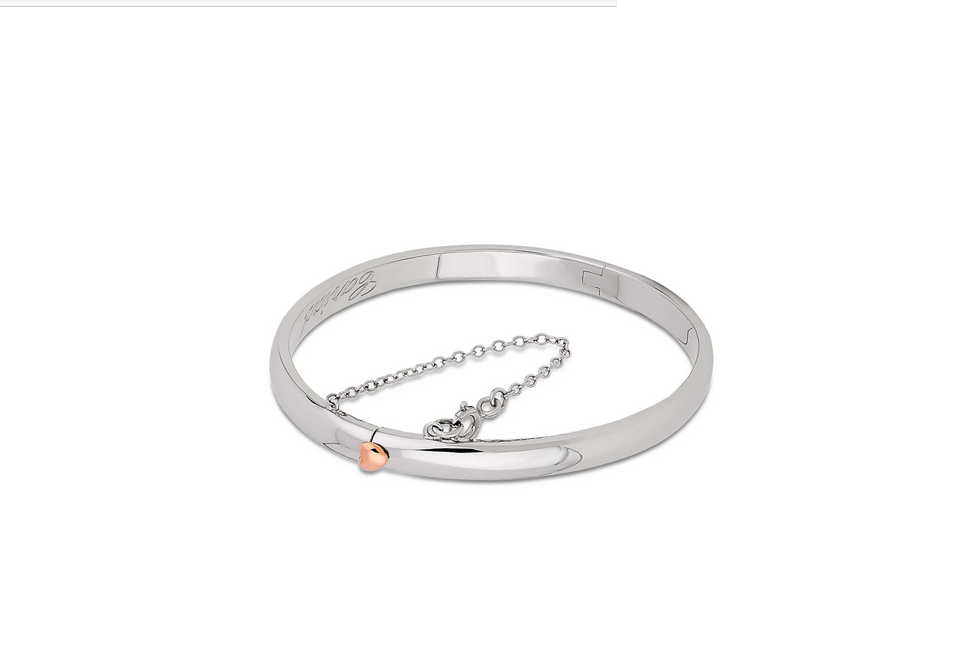
Some words do more work than their dictionary definitions suggest. In Wales, cariad is one of them. It means love, but it is also the word a grandmother uses for a grandchild, a partner uses across the kitchen table and a shopkeeper might use when handing over your change. Clogau, the Welsh jeweller whose pieces each contain a touch of rare Welsh gold, has named one of its best known collections after this small, warm word, and it is a fitting choice.
As the season of giving approaches, it is worth looking a little more closely at the Welsh language of affection, the traditions that surround it and the ways sentiment can be expressed in jewellery without a single word being spoken aloud.
A Word With Many Shades
More than a translation.Cariad, pronounced roughly as car-ee-ad with the stress on the first syllable, translates simply as love. In practice it stretches much further. It can be a noun for the feeling itself, a term of endearment for a sweetheart or a gentle form of address for almost anyone, much as darling or love might be used in parts of England. That flexibility is what gives the word its charm. It is intimate and everyday at the same time.
Familiar beyond Wales.Many people who do not speak Welsh still recognise cariad, having heard it from friends, family or visits to Wales. It has become one of those words that crosses borders easily, carrying a sense of warmth and belonging with it. For anyone with a Welsh connection, it can feel like a small piece of home. Browsing the Cariad collection shows how naturally that sentiment translates into jewellery designed to be worn close to the heart.
From Spoken Word to Welsh Gold
Giving a word a shape.Turning a word into a piece of jewellery is a delicate task. The design has to carry the feeling of the word without becoming a slogan, and it has to be wearable every day. Clogau’s Cariad pieces approach this through gentle, romantic forms that sit comfortably alongside other jewellery, so the meaning is there for those who know it and simply beautiful for those who do not.
Read More: Keys That Tell Your Story: Why Customized Keychains Have Become Personal Statements in 2025
The gold behind the word.There is also a satisfying link between the language and the material. Every Clogau piece contains a touch of gold from the Clogau St David’s mine in Eryri, so a design named after a Welsh word carries a small part of the Welsh landscape too. For a gift intended to express love for a person, and perhaps for Wales itself, that coherence is hard to beat.
Welsh as a Living Language
Ancient and everyday.Welsh is one of the oldest living languages in Europe, with a literary tradition stretching back well over a thousand years. Yet it is far from a museum piece. It is spoken daily in homes, schools, workplaces and on television, and it continues to evolve. That combination of deep roots and present day vitality is part of why Welsh words carry such resonance when they appear on jewellery.
A sense of identity.For many families, Welsh is bound up with memory and identity. A word in the language can recall a parent’s voice, a childhood holiday or a sense of belonging to a particular place. Wearing that word, or giving it as a gift, is a quiet way of honouring those connections, whether the recipient is a fluent speaker or simply someone who loves Wales.
Other Welsh Words of Affection
Cwtch.Perhaps the most famous Welsh word after cariad is cwtch, which rhymes with butch. It means a cuddle, but with a particular warmth that English struggles to capture, and it can also describe a small, safe place, such as a cupboard under the stairs. A cwtch is protective as well as affectionate, which is why so many people say it has no true English equivalent.
Annwyl and hiraeth.Annwyl means dear and appears at the start of letters as well as in conversation. Hiraeth is harder to pin down. It describes a deep longing for home, or for a place or time that may no longer exist, and it is often cited as one of the most untranslatable words in the language. Both speak to the emotional depth that Welsh vocabulary brings to matters of the heart.
Saying it plainly.If you want the full phrase, I love you in Welsh is Rwy’n dy garu di. It is a lovely line to write in a card accompanying a gift, even if the recipient needs a little help with the pronunciation. Making the effort to use the language, however imperfectly, tends to be appreciated.
Love Tokens in Welsh Tradition
The carved love spoon.Wales has a long tradition of giving tokens of affection, the best known being the love spoon. Surviving examples date back to the seventeenth century, and young men are said to have carved them from a single piece of wood to present to the person they hoped to court. The designs were rich in symbolism: hearts for love, chains for togetherness, keys for a shared home and twisted stems for two lives joined as one.
Read More: Customised Number Plate Car Keychain: The Ultimate Personalized Accessory for Car Lovers
Saint Dwynwen.Wales also has its own patron saint of lovers, Santes Dwynwen, whose feast day falls on 25 January. Dydd Santes Dwynwen has become a popular day for cards and gifts in Wales, offering a gentle Welsh alternative to Valentine’s Day. For anyone planning ahead, it provides a second opportunity in the winter months to mark a relationship with something meaningful.
From wood to gold.Modern jewellery, Clogau’s included, continues this tradition in a different material. Where a love spoon used carved symbols to say what the giver might have struggled to put into words, a piece of fine jewellery can do the same with a heart, a flower or a carefully chosen motif. The intention, a lasting token of affection, remains unchanged.
Hearts, Flowers and Remembrance
The universal heart.The heart is the most widely recognised symbol of love, and its simplicity is its strength. A heart pendant can be romantic, maternal or celebratory of a friendship, depending on who gives it and why. A well considered range of heart jewellery shows how varied the motif can be, from open outlines to more solid forms set with a little sparkle.
The meaning of forget-me-nots.Flowers carry their own language. The forget-me-not, with its small blue petals, has long been associated with true love, faithfulness and remembrance. That makes it a particularly tender choice for someone far away, for a mother or grandmother, or in memory of a loved one. Designs inspired by the forget-me-not flower offer a delicate way of saying that someone is held in mind.
When Sentiment Becomes Design
Words you can wear.Some jewellery expresses its meaning through motifs; others are built around a clear message. A collection such as Forever Yours puts the sentiment into the name itself, making the intention unmistakable. Clogau designs like this suit anniversaries, milestone birthdays and those moments when you want the gift to speak plainly.
A story in every piece.Other designs tell a story through combined elements, where hearts, flowers and other symbols are brought together to suggest a narrative of love and connection. The Love Story range is a good example of this approach. These pieces invite the wearer to read their own story into the design, which is part of what makes them so personal.
Choosing the Right Sentiment for the Relationship
Romance or warmth.Not every gift needs to be overtly romantic. Cariad itself shows that love comes in many forms, and the right piece should reflect the relationship. A heart or a message of devotion suits a partner, while a forget-me-not or a softer motif may be more fitting for a parent, sibling or close friend.
For someone far away.Distance changes the way we give. For a child at university, a friend who has moved abroad or a relative you see only a few times a year, a piece that says they are never far from your thoughts can mean a great deal. Designs from the Always in My Heart collection capture exactly that idea, and they are often chosen for the people we miss most during the festive season.
Let the words do the work.When the jewellery carries a Welsh word or a clear sentiment, keep the accompanying card simple. A sentence explaining why you chose it, or what the word means to you, is often enough. If the recipient has Welsh roots, using a phrase in Welsh adds a lovely personal layer.
A Gift for the Season of Giving
From Christmas to Santes Dwynwen.The weeks between Christmas and the end of January offer two natural moments for meaningful gifts in Wales. A piece chosen in December can be followed by a small token on Dydd Santes Dwynwen, creating a tradition that reflects both the season and Welsh culture. Clogau pieces, with their touch of Welsh gold from the hills near Dolgellau, carry that sense of place into every gift.
Love in any language.In the end, the most meaningful jewellery is less about the object and more about the feeling behind it. Whether you choose a piece inspired by cariad, a heart, a forget-me-not or a design that puts your sentiment into words, the gift becomes a way of saying something that matters. And in Welsh, as in English, that feeling is best summed up in a single, simple word.